
Why Your Team Probably Needs to Prioritize More (And How AI Makes It Possible)
- Apr 29
- 6 min read
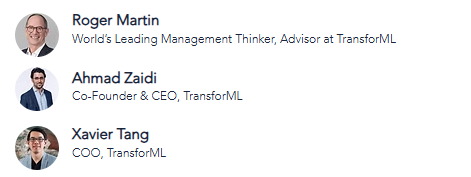
AUTHORS
At TransforML, we spend a lot of time analyzing how companies execute on their strategy and what makes them successful. Recently, when we looked at anonymized data of our client’s blockers and governance meeting topics, we discovered a surprising trend.
The data revealed a hidden problem: In 55% of business units, less than 1% of their conversations focused on prioritization. Only 22% of business units discussed prioritization as 10% or more of their topics.
Percentage of organizations and percentage of their topics related to Prioritization

When we looked at the teams that did prioritize regularly (spending more than 10% of their time making active choices about what to do next) they were almost exclusively technology and software development teams.
This creates a serious risk for business transformation. Strategy is not just a plan; it is a daily practice. In this article, we draw on our previous consulting experience (firms like McKinsey and EY) and insights from our advisor, strategy guru Roger Martin, to explore why this prioritization gap exists and how your company can overcome it.
The Problem: The Prioritization Gap Outside of Tech
Why do technology teams prioritize constantly, while operational and business teams do not?
The answer lies in their daily routines. Tech teams have built-in systems—like Agile sprints, backlogs, and sizing rubrics—that force them to prioritize their work every week. In contrast, operational business units usually set their strategy once a year. After that annual planning session, they switch to pure execution mode. They run like a machine until something big goes wrong.
For example, a sales team might focus entirely on a target of "200 leads per week." They are so busy operating the machine that they rarely stop to ask: Are these the right leads? Are we targeting the right customer personas? Are we in the right geographies?
Roger Martin often argues that strategy and decision-making must be tied together continuously. You need to make choices at every stage of your business. If a business unit never stops to prioritize its current activities against the bigger picture, it is missing a massive opportunity to create strategic value. Prioritization is not just for tech teams; it is essential for every part of the business.
Our Insights: Why Prioritization Fails and How to Fix It
If continuous prioritization is so important, why do managers struggle to do it? From observing our clients across the globe, we have identified three main reasons:
Lack of a Ready-Made Rubric: Tech teams have established rules for how to prioritize. Every other function, whether marketing, HR, or finance, has to invent its own rubric. This is tricky and takes a lot of mental effort.
Missing Cadence: Many companies do not have the time or space for strategy discussions. If leadership teams only review strategy during a Quarterly Business Review (QBR), they lose the opportunity to make agile, real-time choices.
The Change Management Challenge: Even when companies have great digital data and KPIs, humans are slow to change their habits. For example, one of our clients, has all the right data and KPIs to make great prioritization decisions. However, having the data is not enough. You also need the "human element"—the change management required to push leaders to actively look at the data and make choices regularly.
How Decision+ Drives Continuous Prioritization
We know that asking busy managers to manually evaluate and prioritize every task is unrealistic. They simply do not have the time. This is exactly where AI can change the game, and why we built Decision+.
Decision+ acts as an intelligent partner for your leadership team. It is designed to look at everything happening across your organization, understand your unique business context, and highlight what truly matters.
Here is how Decision+ helps your company manage strategy and transformation:
360 degree view of your organization: Use Decision+’s AI to gather blockers and action items from emails, chats, and meetings. Each person’s key actions show up in 1 central place.
Tailored Prioritization Rubrics: Based on the information Decision+ knows about your work, our AI will determine what your prioritization rubric should be, then allow you to adapt it if there are priorities from ‘hallway discussions’ that are not captured in Decision+.
Apply the rubric to focus on what matters: use the rubric to filter down your and your team’s to-do list to focus on actions that move the needle on the priorities.
Enabling the Human Element: We built Decision+ with change management in mind. It naturally creates a routine that is easy to follow. Even so, we’ve seen the most impact when our expert team is involved in the change management process to provide assurance that the organization received maximum value from a Decision+ implementation.
Prioritization should not be a luxury reserved for the IT department. With the right routines and the power of AI, every business unit can continuously align their daily actions with the company's ultimate strategy.
The Problem: The Prioritization Gap Outside of Tech
Why do technology teams prioritize constantly, while operational and business teams do not?
The answer lies in their daily routines. Tech teams have built-in systems—like Agile sprints, backlogs, and sizing rubrics—that force them to prioritize their work every week. In contrast, operational business units usually set their strategy once a year. After that annual planning session, they switch to pure execution mode. They run like a machine until something big goes wrong.
For example, a sales team might focus entirely on a target of "200 leads per week." They are so busy operating the machine that they rarely stop to ask: Are these the right leads? Are we targeting the right customer personas? Are we in the right geographies?
Roger Martin often argues that strategy and decision-making must be tied together continuously. You need to make choices at every stage of your business. If a business unit never stops to prioritize its current activities against the bigger picture, it is missing a massive opportunity to create strategic value. Prioritization is not just for tech teams; it is essential for every part of the business.
Our Insights: Why Prioritization Fails and How to Fix It
If continuous prioritization is so important, why do managers struggle to do it? From observing our clients across the globe, we have identified three main reasons:
Lack of a Ready-Made Rubric: Tech teams have established rules for how to prioritize. Every other function, whether marketing, HR, or finance, has to invent its own rubric. This is tricky and takes a lot of mental effort.
Missing Cadence: Many companies do not have the time or space for strategy discussions. If leadership teams only review strategy during a Quarterly Business Review (QBR), they lose the opportunity to make agile, real-time choices.
The Change Management Challenge: Even when companies have great digital data and KPIs, humans are slow to change their habits. For example, one of our clients, has all the right data and KPIs to make great prioritization decisions. However, having the data is not enough. You also need the "human element"—the change management required to push leaders to actively look at the data and make choices regularly.
How Decision+ Drives Continuous Prioritization
We know that asking busy managers to manually evaluate and prioritize every task is unrealistic. They simply do not have the time. This is exactly where AI can change the game, and why we built Decision+.
Decision+ acts as an intelligent partner for your leadership team. It is designed to look at everything happening across your organization, understand your unique business context, and highlight what truly matters.
Here is how Decision+ helps your company manage strategy and transformation:
360 degree view of your organization: Use Decision+’s AI to gather blockers and action items from emails, chats, and meetings. Each person’s key actions show up in 1 central place.
Tailored Prioritization Rubrics: Based on the information Decision+ knows about your work, our AI will determine what your prioritization rubric should be, then allow you to adapt it if there are priorities from ‘hallway discussions’ that are not captured in Decision+.
Apply the rubric to focus on what matters: use the rubric to filter down your and your team’s to-do list to focus on actions that move the needle on the priorities.
Enabling the Human Element: We built Decision+ with change management in mind. It naturally creates a routine that is easy to follow. Even so, we’ve seen the most impact when our expert team is involved in the change management process to provide assurance that the organization received maximum value from a Decision+ implementation.
Prioritization should not be a luxury reserved for the IT department. With the right routines and the power of AI, every business unit can continuously align their daily actions with the company's ultimate strategy.

Comments